


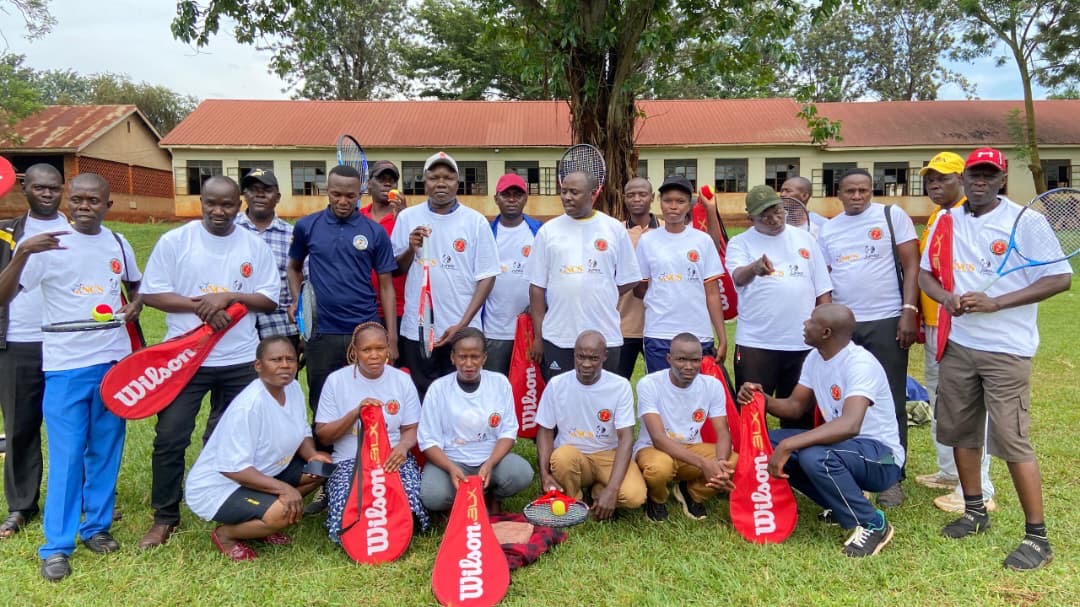

The Uganda Tennis Association (UTA) has rolled out an ambitious nationwide tennis development program aimed at expanding lawn tennis to at least 75 districts across Uganda. The initiative, which begins with regional activities this month, is aligned with the country’s new National Sports Act and is expected to shape the sport’s growth over the coming years.
The new Sports Act requires structured governance, formal registration of sports entities, and nationwide participation. UTA’s latest move is designed to meet those standards while building strong grassroots systems that can identify and nurture young talent. By strengthening district-level structures, the association hopes to make lawn tennis more organized, competitive, and accessible.
The program will start with regional coaching workshops bringing together District Sports Officers and selected Primary Sports Officers. These sessions are intended to equip teachers and sports leaders with modern coaching methods and practical tennis development strategies. The focus is on building capacity at the local level so that schools can run structured and sustainable tennis programs.
One of the key targets of the initiative is to position lawn tennis as a competitive sport in the Uganda Primary Schools Sports Association (UPSSA) Ball Games 2026. To achieve this, structured coaching sessions will be conducted for primary school pupils to prepare them for competition. Regular monthly regional competitions will also be organized to give young players match experience and help identify emerging talent.
UTA will support equipment procurement by working closely with schools and districts. Participating schools and clubs will receive starter kits including balls, rackets, and mini nets to kick-start activities. This support is expected to remove one of the biggest barriers to introducing tennis in many districts.
A major part of the rollout involves forming new clubs under the UTA umbrella. These clubs will be established in primary schools, secondary schools, tertiary institutions, and community sports clubs. Regions set to benefit include West Nile, Lango, Acholi, Karamoja, Teso, Bugisu, Sebei, Busoga, Bukedi, Wakiso, Mukono, Kampala, Luweero, Mubende, Masaka, Mpigi, Ankole, Kigezi, Rwenzori, and Bunyoro. In each district, the District Sports Officer will coordinate the formation of school-based and community-based tennis clubs, which will serve as training hubs and competition centres.
To ensure full compliance with the new law, UTA tutors will dispatch official club registration documents to District Sports Officers and designated school representatives. Once signed, copies of the documents will be retained by the school or club, the District Sports Officer, and UTA. Only formally registered clubs will operate under UTA’s governance and technical guidance. Registered clubs will then receive tennis equipment to begin activities.
Monitoring and evaluation will be handled by the UTA Secretariat and members of the Executive Committee. Monthly and quarterly competitions will act as performance benchmarks for selecting district representatives for the Kids Ball Games 2026. Player progress will also be recorded within UPSSA systems, with detailed data captured for analysis.
The collected information will feed into the Junior Tennis Initiative report submitted to the International Tennis Federation (ITF). Based on this analysis, the UTA Secretariat will identify areas that need improvement and introduce targeted solutions to strengthen lawn tennis development nationwide.

